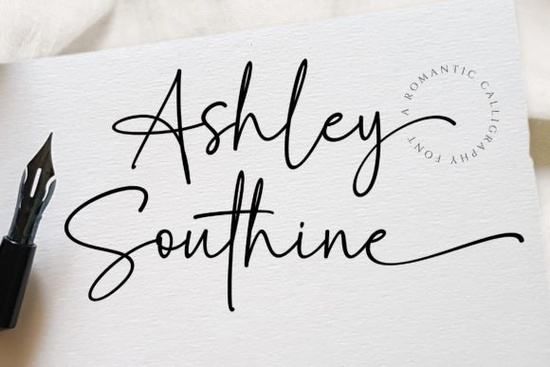
Finding the right lettering for a personal project can take hours of scrolling through endless libraries. If you need something that feels genuinely written by hand rather than typed on a keyboard, the Ashley Southine Font is a solid option to consider. It brings a warm, relaxed vibe to wedding stationery, custom mugs, and boutique logos. Instead of looking like a rigid digital typeface, the letters feature natural curves and varied stroke widths that mimic real penmanship.
What makes a handwritten script feel authentic?
When crafting physical products or digital invites, authenticity matters. People connect with designs that look like a real person sat down with a pen and paper. This is why many crafters and small business owners browse collections of organic lettering styles to find the right fit for their brand. The charm here lies in the slight imperfections, varied baselines, and fluid connections between characters.
If you are comparing different options for a client, you might also look at how other casual penmanship styles handle lowercase loops and uppercase swashes. A good script avoids perfect symmetry, giving each word a unique, human rhythm that feels approachable and friendly.
Where should you use this style of lettering?
This type of lettering works best when you want to create an intimate, welcoming mood. Small business owners often use it for packaging labels, product tags, or thank-you cards to make customers feel special and valued.
Here are a few practical applications for your next project:
- Wedding invitations: Pairing it with a clean serif for the event details while using the script for the couple's names.
- Print-on-demand apparel: Printing elegant, motivational quotes on canvas tote bags or baby onesies.
- Brand logos: Giving a local bakery, florist, or handmade soap shop a personalized signature look.
- Greeting cards: Adding a custom, heartfelt touch to holiday or birthday messages.
For more inspiration on elegant branding, checking out the Smithson family of typefaces can give you fresh ideas on how to balance thick and thin strokes in a professional logo.
How do you pair script fonts with other typefaces?
Mixing typefaces is where many beginners struggle. The golden rule of typography is contrast. Since a flowing script is highly decorative and visually dense, it needs to be paired with something simple, minimal, and easy to read.
A standard sans-serif or a classic serif works perfectly for body text. For example, if you are designing a restaurant menu, use the script for the dish names and a clean, minimal font for the descriptions and prices. This keeps the layout readable while maintaining a stylish aesthetic.
If you want to experiment with more decorative pairings, looking at the Front Picture collection might show you how to mix illustrative elements with flowing text. Alternatively, the Sunshine typeface options offer a slightly different mood if you need a brighter, more playful alternative for summer or spring projects.
Which backgrounds and colors work best?
Because handwritten scripts feature very thin hairline strokes, they can easily disappear if you place them on a busy background. Always prioritize high contrast. Dark text on a light, solid background or crisp white text on a dark, matte surface works best. If you are placing the text over a photograph, add a subtle dark overlay or a solid shape behind the lettering to ensure every delicate curve remains visible.
What settings should you adjust in your design software?
To get the most out of any script typeface, you need to tweak a few specific settings in Illustrator, Canva, or Photoshop before finalizing your file.
First, always enable ligatures if the font includes them. This ensures that connecting letters flow smoothly without awkward gaps or overlapping strokes. Second, adjust the tracking, which is the overall letter spacing. Scripts usually require negative or zero tracking so the letters connect properly. If you add space between the characters, the connecting strokes will break, completely ruining the handwritten illusion.
Finally, pay close attention to the line height. Because script letters often have tall ascenders and deep descenders, you need to increase the leading so the loops from the line above do not crash into the text below. If your design software allows it, turn on the auto-hinting feature to keep the thin strokes sharp when exporting for web use.
Quick pre-export checklist
- Check that all ligatures are enabled and connecting strokes look natural.
- Verify the letter spacing is tight enough to maintain the continuous flow.
- Ensure the body text contrasts well and is easy to read at your chosen size.
- Test print a small sample if you are sending the file to a commercial printer to check ink spread on the thin strokes.
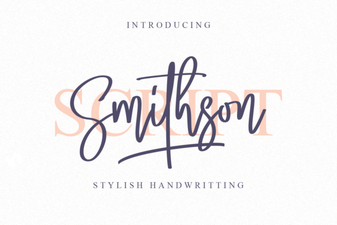 Smithson Font: Design Tips and Inspiration
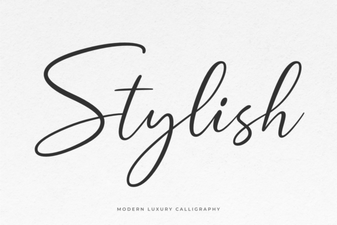 Unlocking Creativity with Stylish Web Fonts
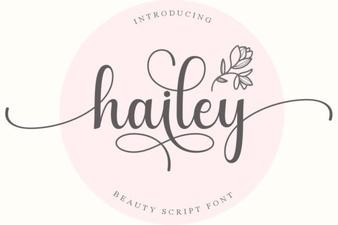 Hailey Font: Creative Design Ideas
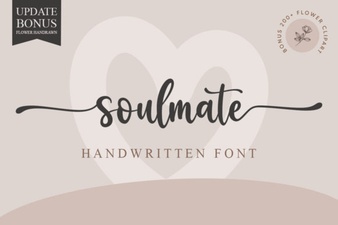 Soulmate Font: Creative Typography for Your Love Story
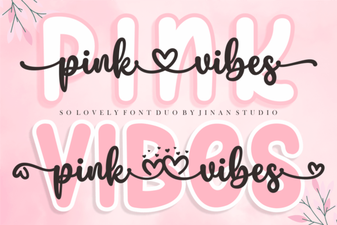 Pair & Design: a Guide to Using Pink Vibes Duo Font
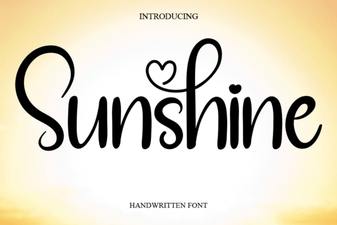 Sunshine Font: Free Download & Creative Project Ideas